
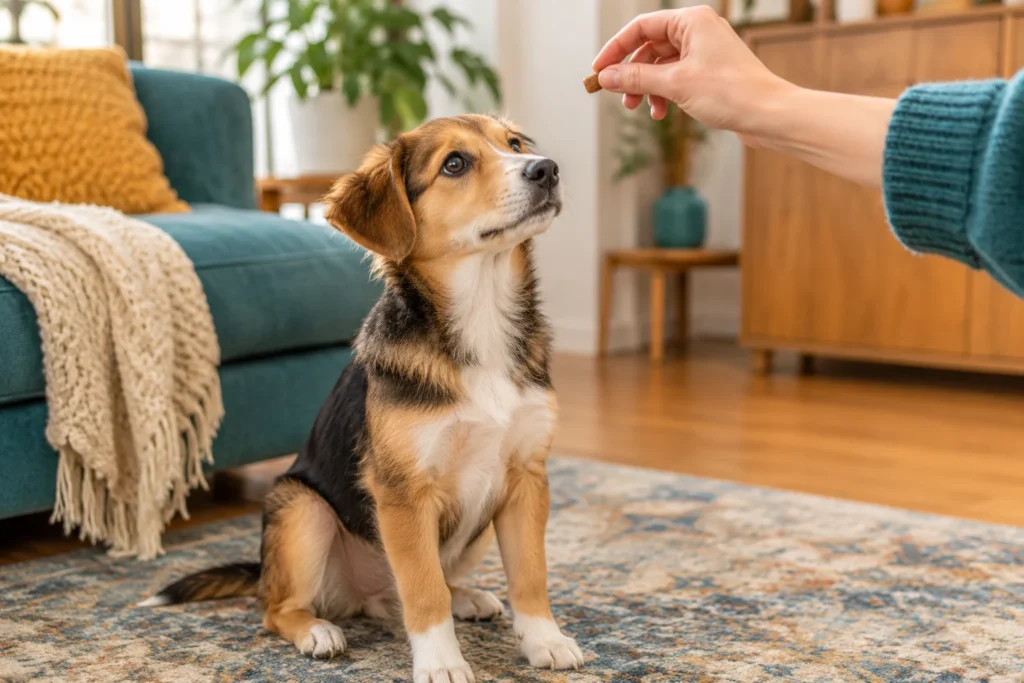
You set aside half an hour to work on sit and stay. Ten minutes in, your dog is sniffing the floor and looking everywhere but at you.
That is not stubbornness. Most dogs learn best in short bursts, and a few good minutes beat a long session that ends in frustration for both of you.
Key Takeaways
- Most adult dogs do best with sessions of 5 to 10 minutes
- Puppies often need just 2 to 5 minutes at a time
- Several short sessions a day beat one long one
- Stop while your dog is still keen and getting it right
- Yawning, sniffing and wandering off are signs to take a break
The Short Answer: 5 to 10 Minutes
For most adult dogs, 5 to 10 minutes of focused practice is plenty. Aim for two or three of these short sessions spread through the day instead of one long block.
Short sessions keep the rewards coming fast, which keeps your dog interested. They also fit into real life. You can practice while the kettle boils, before a meal or during a TV break.
How Long by Age
Attention span changes with age and experience, so use these as starting points and adjust to the dog in front of you.
- Young puppies: 2 to 5 minutes, several times a day, with lots of play in between
- Adolescent dogs: 5 to 10 minutes, with easy wins mixed in when focus dips
- Adult dogs: 5 to 15 minutes, depending on how new or hard the skill is
- Senior dogs: 5 to 10 minutes, with gentle movements and softer surfaces
New skills and busy places are harder work. If you are teaching something brand new or practicing at the park, cut the session shorter than you would at home.
Signs It Is Time to Stop
Your dog will tell you when its brain is full. Watch for these signs and wrap up before things fall apart.
- Slower responses to cues it knows well
- Sniffing the ground, scratching or yawning
- Looking away or wandering off
- Grabbing treats roughly or losing interest in them
- Barking, jumping or getting silly
When you see them, ask for one easy thing your dog knows, reward it and finish. Ending on a win makes your dog eager for the next session.
How to Get More From Each Session
A few small habits make short sessions count.
- Work on one skill at a time
- Use small, soft treats your dog can swallow quickly
- Train before meals, when food is more exciting
- Pick a quiet spot first, then add distractions slowly
- Reward the behavior you want and skip the scolding
Training also works better when the rest of the day is in good shape. A dog that has had a walk, a meal and a rest can focus. This free Dog Routine Check looks at how your dog’s day fits together.
If you would like a ready-made plan of short games and lessons to follow, a structured program can save you from guessing what to teach next.
When to Get Help
Short sessions are for teaching skills. They are not a fix for growling, snapping or biting. If you see any of those, or a sudden change in behavior, talk to your veterinarian and a certified trainer or veterinary behaviorist.
For everything else, keep it short, keep it kind and practice a little every day. Five good minutes add up faster than you think.
This article is for general education and is not veterinary advice. Coach Luke is not a veterinarian or a professional dog trainer.
Talk to your veterinarian before changing what your dog eats, how much it exercises or which supplements it takes, and about any behavior that is new, sudden or severe. For aggression or biting, work with a certified trainer or a veterinary behaviorist. Paw Luke links to reviews on coachluke.com, where Coach Luke may earn a commission if you buy.