
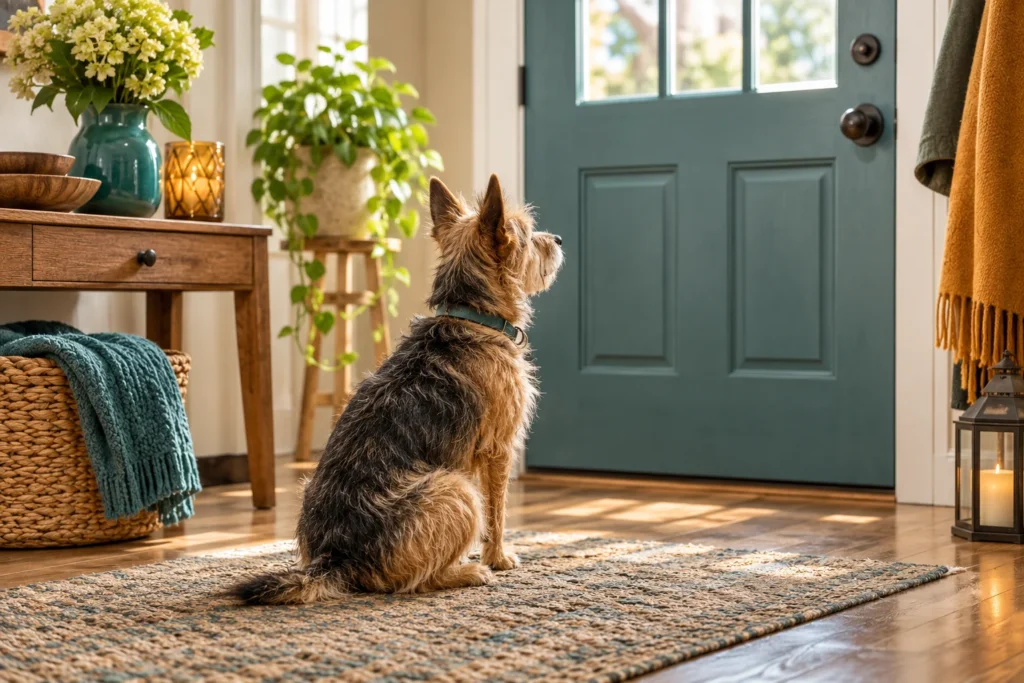
The doorbell rings and your dog goes from asleep to full volume in one second. Visitors get a wall of noise before they even step inside.
It is one of the most common things dog owners ask about, and it is very fixable for most dogs. The first step is understanding what the bell means to your dog.
Key Takeaways
- The doorbell predicts something big, so your dog reacts before thinking
- Most doorbell barking is excitement or alarm, not bad behavior
- Teaching a go-to-your-mat routine gives your dog a job to do
- Practice with the bell when nobody is really at the door
- Punishment tends to add stress and can make barking worse
Why the Doorbell Sets Your Dog Off
Dogs learn patterns fast. Every time the bell rings, a person appears. To your dog, that sound is a reliable signal that something exciting or worrying is about to happen.
Barking also seems to work. The dog barks, the door opens and the mystery is solved. From your dog’s point of view, the barking made that happen, so it does it again next time.
Some dogs are thrilled about visitors. Others are unsure and are sounding an alarm. Loose, wiggly body language points to excitement. A stiff body, a tucked tail or backing away points to worry.
Teach a Calm Doorbell Routine
The goal is to give the bell a new meaning: go to your spot and good things happen. Work through these steps over a week or two, in short sessions.
- Pick a mat or bed a few steps back from the door
- Reward your dog for stepping onto the mat, then for lying down on it
- Add a cue such as Mat once your dog heads there happily
- Play a quiet doorbell sound on your phone, then cue Mat and reward
- Slowly raise the volume, then switch to the real bell
- Add a helper at the door only when the earlier steps are easy
Keep treats near the door so you are always ready. If your dog barks, wait for a pause, guide it to the mat and reward the quiet.
What Makes It Worse
A few common reactions feel natural but tend to backfire.
- Shouting over the barking, which can sound like you are joining in
- Rushing to the door, which adds to the excitement
- Spray bottles, shake cans or bark collars, which add stress without teaching your dog what to do instead
- Practicing only when real guests arrive
A dog with enough exercise and mental work also finds it easier to settle. Daily walks help both of you, and this free 5-day walking challenge is a simple way to build the habit for yourself.
If barking is part of a bigger pattern of jumping, pulling and over-excitement, a course built around calm household habits may be a better fit than working on the bell alone.
When to Call a Professional
Get help from your veterinarian and a certified trainer or veterinary behaviorist if your dog growls, lunges or snaps at visitors, or seems truly frightened. A sudden change in barking is also worth a vet visit, since pain and hearing changes can play a part.
For most dogs, a few minutes of mat practice a day turns the doorbell from an alarm into a cue to settle.
This article is for general education and is not veterinary advice. Coach Luke is not a veterinarian or a professional dog trainer.
Talk to your veterinarian before changing what your dog eats, how much it exercises or which supplements it takes, and about any behavior that is new, sudden or severe. For aggression or biting, work with a certified trainer or a veterinary behaviorist. Paw Luke links to reviews on coachluke.com, where Coach Luke may earn a commission if you buy.